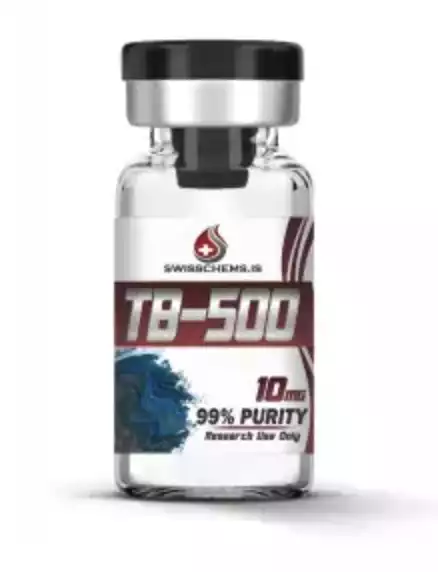
Verified > 99% Lab-grade Peptides
Selecting the appropriate outside laboratory for peptide screening involves reviewing several factors. A trusted laboratory must have demonstrable experience in peptide chemistry evaluation-- for instance, PhD-level chemists or biochemists on staff who recognize peptides' synthesis and deterioration pathways. Accreditation by appropriate bodies (such as ISO/IEC or qualification for GLP/GMP compliance) is a solid indicator of top quality.A useful assay measuring downstream signaling-- or an architectural study making use of NMR or X-ray crystallography-- requires the highest pureness readily available. Crystallographers in particular commonly call for ≥ 98% purity since even small pollutants can avoid crystal development or present problem right into the crystal lattice. As particles leave the column, they travel through a detector-- generally a UV detector set to 214 or 220 nm, wavelengths where the peptide bond takes in light strongly. The detector documents just how much UV light is soaked up over time, creating a chart called a chromatogram. This overview breaks down what pureness in fact implies in peptide chemistry, just how it's gauged, what the impurities are, and just how to check out the paperwork that shows a peptide is what it asserts to be.
The liquified peptide sample is injected right into a stream of fluid solvent (the mobile phase) that streams via a tube loaded with tiny fragments (the stationary phase). Various molecules "stick" to those bits with various toughness, so they take a trip with the column at different rates. Subtle differences in basic material pureness and framework can bring about disparities in the activity of the final product.Solutions
Together, these analytical approaches give the proof base for concluding that a peptide set is suitable for study usage. One more associated term you might encounter http://www.video-bookmark.com/user/ofeithqvea is net peptide content, which is different from pureness. Net peptide content refers to how much actual peptide (by weight) is in the vial relative to non-peptide elements like water, counter-ions (e.g., TFA), or buffer salts.- These are commonly existing at very reduced degrees in appropriately manufactured peptides and are controlled by ICH Q3C standards for appropriate limitations.Always check that your peptide comes with appropriate analytical data (HPLC chromatogram and MS outcomes) and is identified for research usage.Using an extremely purified peptide decreases these threats and enhances the reliability of your data.Do not be alarmed-- this is normal and is usually established by separate analyses (like amino acid analysis).
If you have actually ever before browsed a peptide catalog, you have actually seen pureness numbers all over. These numbers obtain thrown around so typically that it's easy to gloss over them-- simply one more spec on a product page. Chameleon Peptides offers study substances solely for lab and logical objectives. All PRG products are planned solely for artificial insemination research or further production use. Utilizing a highly detoxified peptide minimizes these threats and boosts the dependability of your data.
At Maxed Out Compounds, every product we provide features a clear testing document and transparent documentation. Our objective is to support scientists with high-purity, validated compounds that fulfill the demands of contemporary clinical research-- nothing more, nothing less. Independent, third-party screening plays a necessary duty in guaranteeing objectivity and precision. By utilizing outside labs for verification, providers remove bias and uphold scientific integrity. It's an additional step that gives researchers confidence that each peptide meets constant, proven requirements. This grade matches most of artificial insemination study applications-- receptor binding assays, enzyme activity studies, and cell culture experiments.
Mass Spectrometry (ms): Identification Confirmation
Theoretically, peptide purity is measured by the chromatogram generated by reversed phase HPLC, and on top of that, we can acquire the number and loved one quantity of possible byproducts by calculating the peak location. A top quality chromatogram has a single, symmetrical major optimal with a flat standard on either side. " Trailing"-- where the top routes off gradually on one side-- can show column problems, sample overloading, or secondary communications in between the peptide and the stationary Tesamorelin stage. In this configuration, the stationary stage is hydrophobic (water-repelling), normally C18-bonded silica. The mobile stage is a slope of water and an organic solvent like acetonitrile, commonly with a percentage of trifluoroacetic acid (TFA) to sharpen the peaks.
Where Can I Buy Lab Tested Peptides?
Other spectroscopic techniques, such as Infrared (IR) or UV-Vis evaluation, are occasionally used for rapid top quality checks or structural verification. This is why credible vendors provide both HPLC and MS data on their Certificates of Evaluation. Peptides in microspheres and nanoparticles might with matrices, making it tough to divide cost-free and encapsulated forms. We use dialysis, ultrafiltration combined with HPLC/UV methods to clinically review encapsulation effectiveness and drug loading. These analyses are useful when customers need more than a mass spectrum and chromatogram to judge whether a whole lot is genuinely fit for quantitative work.